
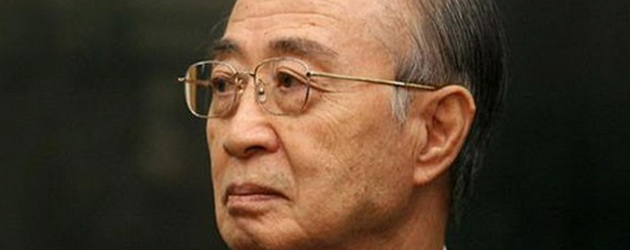
Regarding the case which led to the pressure on Republika Srpska,
and the media accusations that Serbs fired the shell, Akashi explained
that after the explosion in Markale on February 5, he formed an expert
commission comprised of five ballistic experts – two from the countries
which supported Alija Izetbegovic’s Government and two from the
countries supportive of the Serbian leadership, with a Canadian
presiding.
All aspects of the fall of the mortar shell were analysed, but it was not possible to determine where it came from, Akashi said.
At the trial of one-time Republika Srpska President Radovan
Karadzic, the Japanese diplomat stressed that some foreign factors were
interested in seeing the war in BiH prolonged and in having the many
cease-fire agreements not respected.
As an example, Akashi cited the mission of former American President
Jimmy Carter, who arrived in BiH at the invitation of the Serbian side
in 1994 and committed to a peaceful resolution.
Serbs and the Serbian leadership accepted the mission, but the
Government in Sarajevo was not happy with Carter’s arrival. The
cease-fire lasted four months, Akashi said.
He confirmed the position that imbalance in the military forces
started after the arms embargo was violated. Assistance from the US,
Arab and Muslim countries, and Croatia, helped the Muslims and changed
the balance of military forces in the long-run.
In his book “In a Valley between War and Peace,” Akashi said that
neither the Sarajevo Government nor the US Government wanted a
long-lasting cease-fire as they were afraid that the militarily stronger
Serbian forces might remain in most of the territory of BiH.
General Francis Briquemont, a military UN commander in BiH, wrote in
his report to Akashi that the Muslim leadership wants to form a Muslim
state in BiH.
Briquemon was embittered by the situation in which the UN forces
were put. He told Akashi that Srebrenica and Zepa were demilitarised,
but that it was not possible to completely disarm these enclaves, which
frustrated the Serbs.
The failure to demilitarise the protected zones was a serious
problem and violated the whole concept for these areas, Akashi
confirmed.
(Srna/Frontal)

