
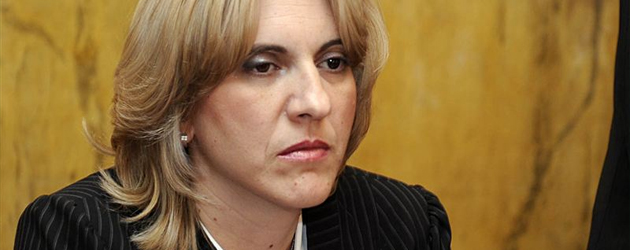
Ms Cvijanović says it was agreed to make a draft of the
decision so that a final solution can be reached through further
discussion, because the outline of the future model is emerging, and the
authorities need to define the final organisational scheme and work on
details.
“It’s hard to predict when we’ll have the final document, but I
think it reasonable to happen in the near future. While doing so, there
are certain issues that will require an extra attention and increased
involvement in order to define their final form or reach an agreement on
them. The most important thing to do is to come to a good and feasible
model, because we’re doing it four our own sake, not to satisfy the
foreigners or send them a message that we’re doing something,” said Ms
Cvijanović.
The Minister underscores that this is a serious job because
different formations made up of the representatives of all levels of
power need to be established, their conduct needs to be defined by rules
of procedure and a viable connection between the technical and
operational and political coordination, which will be free from any
political disputes, needs to be made.
“In a nutshell, we have to make available a coordination system that
will make possible actual moving forward, while at the same time
avoiding any obstructions of the process, and the system will be based
on the constitutional competences of all levels of power. During the
process, all these elements must be combined with the existing bodies
established on the basis of the Provisional Agreement, i.e. the
Stabilisation and Association Agreement when it comes into force later
on, which are in charge of monitoring the implementation of contractual
obligations,” explained Ms Cvijanović.
According to her, the model being created right now will have to be
upgraded several years later when Bosnia and Herzegovina comes closer to
accession negotiations, but until then, it is important to make sure
that all levels of power are operational, and specify the manner in
which the institutions on different levels of power harmonise views
between each other.
“One voice in different areas does not mean forming an institutional
point that will be authorised by someone to carry out European matters
on behalf of others, but rather a communication channel via which one
will present to the European Union what has been agreed internally, and
carry over a ‘task’ from the EU to the internal levels of the system, in
which process they themselves should be fulfilling the obligations,
making joint decisions, giving instructions, defining the priorities,
etc.,” said Cvijanović.
“The purpose of the coordination mechanism is not to go through the
motions, but quite the opposite – everyone should do their job and be
committed to it, everything should be well-coordinated, because the
whole Bosnia and Herzegovina is moving towards the EU, and that’s why
the process has to be the ownership of everybody in Bosnia and
Herzegovina, not of some imaginary, isolated points,” she asserted.
“I’m positive that we will arrive at a model that will be capable of
meeting the requirements of the integration process, and that, after
we’ve had several years of chaos and political tricks and attempts at
taking over the competences through this process, the model will finally
be feasible and efficient and offer us an opportunity to see the
process of integration as something that is our own, not something
imposed,” said Cvijanović.
(Srna/Frotnal)

